
When September rolls around, many families face the same question: Which after-school activity is right for my child?
There are plenty of options to choose from: sports, music, language classes, art, theater, robotics, coding, and more. Each offers something different, and no single activity is the best fit for every child. But beyond the specific skill or subject being taught, there’s a more important question worth asking: What makes an after-school activity truly worthwhile?
After all, an after-school activity should be more than just a way to fill an afternoon. When thoughtfully designed, it can give children the opportunity to learn new skills, take on challenges, discover their interests, and, most importantly, realize for themselves that they’re capable of doing things they couldn’t do before.
It should spark their curiosity
Children learn best when they’re genuinely curious about what they’re doing. That doesn’t mean an activity should always be easy or that every moment has to be fun. Learning takes effort, too, and sometimes things don’t go as planned. But there’s a big difference between putting in the effort because you want to achieve something and doing it simply because someone told you to.
A good after-school activity should make children eager to participate, encourage them to ask questions, and give them a reason to keep learning. That’s why, when choosing an activity for our children, it’s not enough to ask what they’ll learn. We should also consider whether the subject interests them and whether they’ll enjoy the learning process itself.
After all, one of the greatest gifts an after-school activity can offer is helping children discover that learning something new can be exciting and rewarding.
It should give them room to do things on their own
Children need to take an active role in their learning. Listening to an explanation isn’t the same as trying something yourself. Following step-by-step instructions isn’t the same as making your own decisions. And completing a task because an adult tells you exactly what to do isn’t the same as figuring out how to solve a challenge on your own.
Children need explanations and guidance, but they also need opportunities to experiment, make mistakes, and find their own solutions. A good after-school activity should encourage this kind of independence.
When children manage to do something without an adult constantly telling them what to do, the benefits go far beyond the activity itself. They build confidence and begin to understand that they can work through challenges and overcome difficulties on their own.
It should offer the right challenges and help them learn from mistakes
Learning often means tackling things we don’t know how to do yet. That’s why a good after-school activity should offer challenges that match each child’s abilities. If everything is too easy, children may lose interest. If everything feels too difficult, they may start to believe they’re not capable of succeeding.
The key is to strike the right balance and give children room to progress at their own pace. Not every child needs to move forward at the same speed or work on exactly the same things. What matters is that each child can build on what they already know and gradually take on new challenges. Along the way, making mistakes should be seen as a normal part of learning.
When something doesn’t work, we can give up or try to understand what went wrong and give it another shot. A good learning environment encourages children to ask questions, try different approaches, and keep going when things don’t work out the first time.
This helps them understand that a mistake isn’t necessarily a dead end. It can be a valuable clue that points them toward a better solution.
It should encourage creativity and make progress visible
Learning something and using that knowledge to create something are two different experiences. A child might learn how a tool works, master a technique, or understand a particular subject. But when they get to put that knowledge into practice and create something of their own, they have to make decisions, experiment, and figure out how they want the end result to look or work.
It could be a song, a drawing, a model, a science project, or a video game. The finished product will depend on the activity, but the experience is much the same: taking what they’ve learned and using it to bring their own ideas to life.
There’s another important benefit, too. When children finish a project, solve a problem that once seemed complicated, or overcome a challenge after several attempts, they can see how much they’ve improved.
That sense of progress matters. The goal isn’t to keep telling children they can do anything they set their minds to. It’s to give them real opportunities to discover what they’re capable of when they have the time, support, and motivation to keep trying.
It should help them develop critical thinking and problem-solving skills
When we think about after-school activities, we tend to focus on the subject being taught: soccer, English, piano, painting, or coding. But a good activity can offer much more than knowledge of a particular subject. How children learn matters just as much as what they learn.
Can they progress at their own pace? Do they have opportunities to experiment and make decisions? Are the challenges suited to their abilities? These are all important questions to consider when choosing an activity for a child.
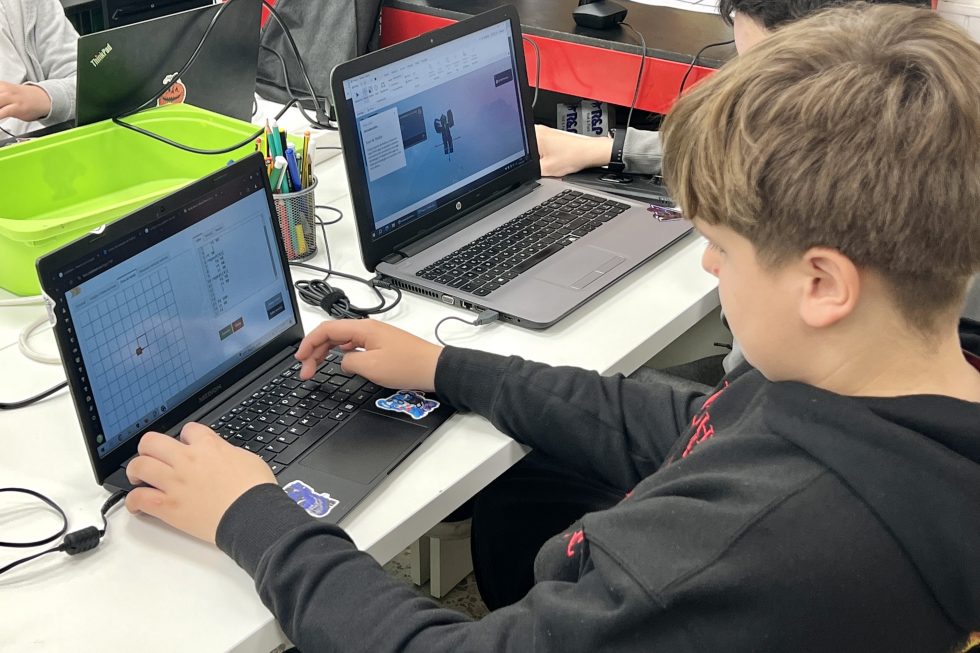
At Codelearn, this is how we approach coding. Programming isn’t just about learning a programming language or writing code. When children write programs, they need to understand a problem, break it down into smaller parts, come up with a solution, test it, identify what isn’t working, and find another way forward. In other words, they learn how to think.
That’s why, at Codelearn, programming is a tool for learning, not the limit of what children can learn. Students also develop skills in math, logic, and problem-solving. The platform also features interactive practice areas where they can work on other skills in engaging ways, including musical notation, chess, languages, and a variety of mental-training exercises.
The goal is to offer a well-rounded learning experience in which technology becomes a way to experiment, solve problems, create, and discover new ways to approach challenges.
Because learning to code doesn’t have to mean learning only how to code. It can also be a way to exercise the mind, strengthen critical thinking, and develop the skills needed to tackle unfamiliar challenges.
So, what should you look for in an after-school activity?
There’s no single activity that’s perfect for every child. Each has their own interests, personality, and learning style. But there are certain qualities worth looking for: an activity that sparks their curiosity, encourages active participation, offers appropriate challenges, and gives them room to make mistakes and try again.
It should also give children opportunities to create and help them recognize their own progress.
Ultimately, a good after-school activity should do more than teach a particular skill or subject. Children should come away from each session with something they didn’t have before: new knowledge, a new skill, a fresh idea, or the satisfaction of accomplishing something that once seemed difficult.
Above all, a good after-school activity should help children discover something that will stay with them long after the activity itself ends: learning is a way to grow, and there’s always a way to keep moving forward.